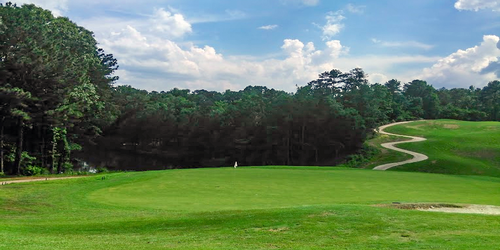

Do not judge this book from the entrance. When you pull into Marquette Golf Club, the holes you see running back and forth along the road belong to the Heritage Course, the club's original 1926 layout. Perfectly nice golf. Not the kind of golf that gets a course ranked number two in the state of Michigan and into the national Top 100 lists. I have watched more than one foursome unload their bags in the parking lot, look around, and say some version of "this is it?"
It is not. Greywalls does not start at the clubhouse. It starts about a half mile away, at the end of one of the best cart rides in golf.
The Ride Up
From the bag drop you board a cart and head into the woods. The path climbs for a solid ten minutes through pine and hardwood, over rock and up the shoulder of the hills above Marquette, and the whole way you are thinking there is no way anyone built a golf course up here. Then the trees open up. You find a small putting green, a starter hut that doubles as the bar and the roller dog stand, and a first tee sitting on top of a bluff roughly 400 feet above Lake Superior.
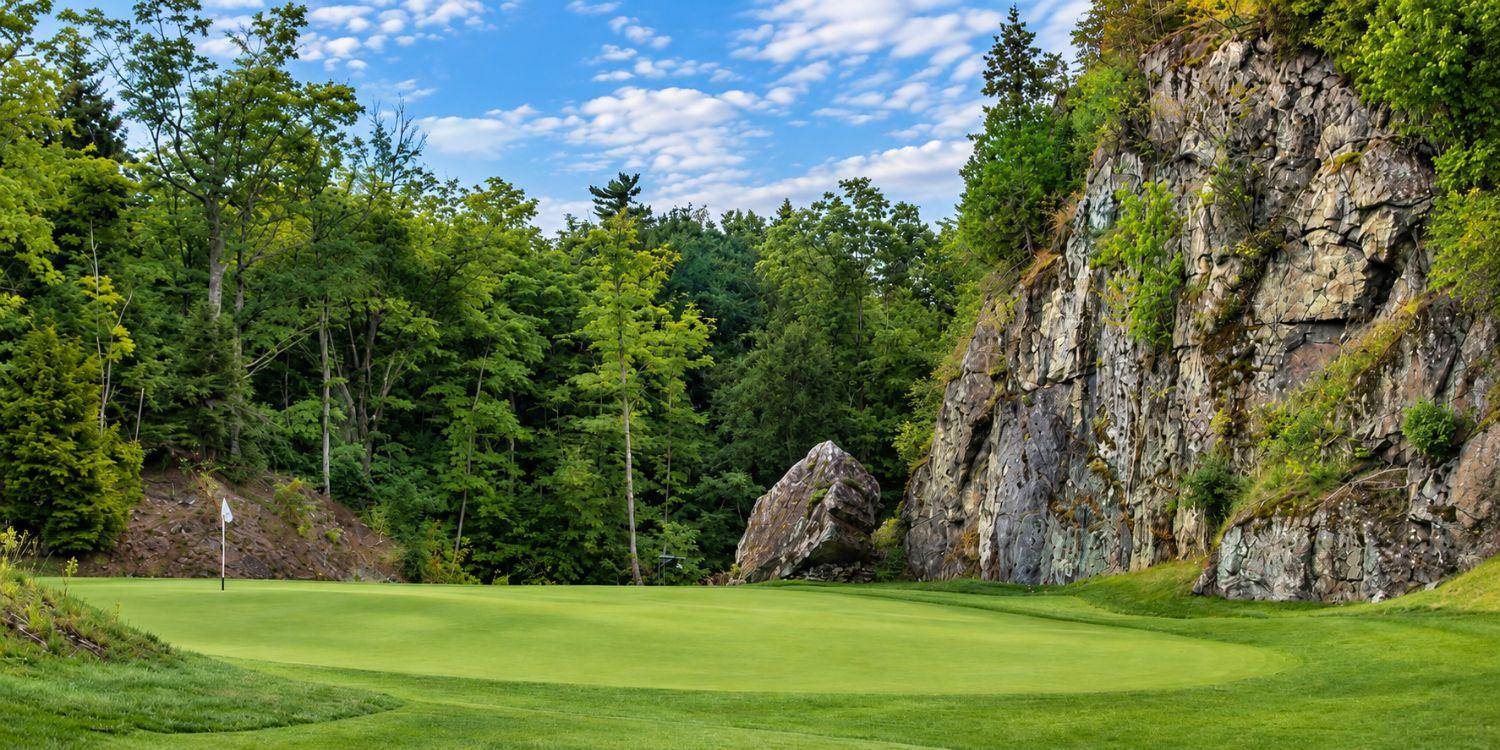
That is the moment Greywalls sinks the hook. Mike DeVries, a Tom Doak apprentice fresh off building Kingsley Club, took a wooded site littered with granite outcroppings and turned it into a course that opened in 2005 to Best New Course honors from just about every publication that hands them out. The name is not marketing. Grey granite walls border some holes, squeeze others, and on a couple of them sit right behind the green like a backstop the Almighty installed.
First tip, and I am not kidding: grab a roller dog and a couple of beverages at the hut before you tee off, and do it again at the turn. You are going to need either calories or liquid courage to get through this thing, and most days you will need both.
The Opening Stretch
The first hole tells you everything about what is coming. It is a long downhill par 5 with wild rock outcroppings up the right side, moguls rolling through the fairway, and a dome-shaped elevated green at the bottom that shrugs off anything not hit with conviction. Lake Superior is out there over your shoulder the entire way. Take a picture, then hit a good one.
The fifth is where Greywalls starts messing with your head. It is an uphill dogleg left, and from the tips the scorecard says 312 yards. If you are playing a box or two forward, do not let the short number fool you. This hole plays much longer than it reads. There is a bell on the tee because you are hitting into a blind landing area, so listen for the group in front of you to ring it. Then pipe a driver or 3 wood that hugs the outcropping on the left to cut the dogleg. Your second shot plays to a green perched just below the namesake grey wall, a big slab of granite that looks over the putting surface and makes a wedge shot feel like a fairly important life decision.
Then fasten your seat belt. The sixth is a par 3 playing somewhere between 180 and 200 yards across a chasm to a green sitting in a stadium of grey rock. The granite wraps around the back of the green in a crescent, so the whole thing feels like you are hitting into an amphitheater built for one shot. This might be the prettiest hole in Michigan that is not sitting on Lake Michigan, and that is saying something in a state with Arcadia Bluffs.
Two Holes That Require an Actual Plan
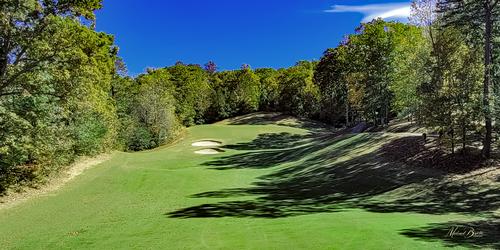
Most of Greywalls is big, wide, and playable. The fairways are generous, driver is in play more often than you would think, and the trouble is usually visible. Two holes break that pattern and deserve a minute of thought on the tee.
The eighth is a short par 4 where everything kicks violently to the left. Everything. Driver may not be the play here. A well-placed hybrid that stays on the high side, inside the right outcropping, leaves you a look at the green if you get a gentle bounce. A driver that leaks left leaves you a look from the trees.
The sixteenth is a dogleg left, and from the tee box all you can see is a sliver of grass. That landing area is your line. Miss slightly right of it and you are fine. Miss left and you are re-teeing or dropping. The green is shaped like a taco, and I mean that as a compliment to both the green and tacos. Study your second shot before you pull a club, because landing on the wrong side of the fold sends your ball places you did not intend.
Here is the best way I can describe the whole experience. This is video game golf at its highest level. If you have played Wolf Creek in Mesquite, Nevada, Greywalls is on that level, with more trees, fewer condos, and a much better lake. The elevation changes, the blind shots, the rock walls, the greens that ask you to land the ball somewhere other than the green to get it close. It is the kind of course where you finish the round, get back in the cart, and immediately start figuring out when you can come back.
The Sister Course, or a Second Lap
If you drove this far north, play the Heritage too. The original nine was designed by William Langford and Theodore Moreau in 1926, with David Gill adding the second nine in 1969. Langford and Moreau built some of the boldest green complexes of the Golden Age, and their fingerprints are still on the property. The front nine is gentle and gets you loose. The back nine tilts and rolls over more dramatic ground with its own views of the lake. It is a fraction of the price of Greywalls, and it makes for a perfect second round or a warm-up the day before.
The other option is a replay at Greywalls. Every time I have brought someone new here, they walked off the 18th saying the same thing: I cannot wait to play that again. It is an hour and a half north of the Island Resort and Casino, so if you are making the drive, go early and give yourself 36. Greywalls twice, or Greywalls and the Heritage. Either way you are not driving home with regrets.
What It Costs and the National Member Play
Greywalls peak season public rate runs $235 with cart from late May through mid September. Spring and fall rates drop to $145 and $155, and fall in the UP means the hardwoods are on fire with color, so the shoulder season is arguably the better deal on every front. Twilight and replay rates knock the number down further. Walking is allowed at a slightly reduced rate, but the cart ride up alone should tell you what you are in for. Bring a cart.
The real value play is the national membership. If your primary residence is 50 miles or more from Marquette, you qualify. For 2026 the single national membership was $600, plus a required $100 clubhouse or pro shop credit that you get to spend anyway, plus either a cart lease or pay-as-you-go cart fees. Call it under $1,000 all in for unlimited Greywalls and Heritage. At peak season rates you have paid for it by your fourth round. The catch is that the club caps it at 75 national memberships, so if this sounds like your kind of deal, call the club and get on the list.
Where to Stay
Marquette is a legit town of about 20,000 with Northern Michigan University, a walkable downtown, a good beer scene, and Lake Superior right there. The club partners with the Hampton Inn, the Holiday Inn, and the Landmark Inn downtown for local stay and play packages, so contact the pro shop for current rates and pairings.
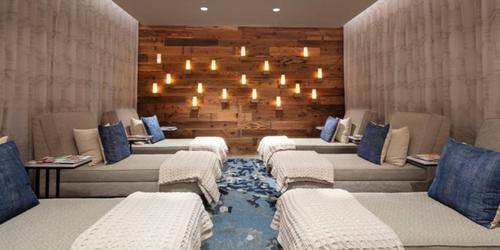
The other option is to base out of the Island Resort and Casino in Harris. Their Perfect 4-Some package pairs their two Paul Albanese courses, Sweetgrass and Sage Run, with TimberStone in Iron Mountain and Greywalls in Marquette. You get a casino, a spa, a steakhouse on top of the tower, and four of the best public courses in the Upper Peninsula in one package. The drive to Greywalls is the longest leg of the trip, so plan it as a full day.
One important note: Island Resort's Greywalls and TimberStone package rounds were sold out for the entire 2026 season, and they are already taking 2027 requests. If you want Greywalls on a casino package, book it the minute the calendar opens.
The Verdict
Greywalls is a pilgrimage. It is three hours past the Mackinac Bridge, it costs real money in the summer, and it will beat you up if you are careless. It is also one of the most memorable rounds of golf in the Midwest, on a piece of property that has no business holding a golf course, designed by an architect who went on to build Cape Wickham. Play the Heritage, eat the roller dog, take the pictures on the first tee, and give yourself a full day. Then start doing the math on that national membership.